


07 Sep „ “Was haben wir gelacht”: Interview with archive producers Mona El-Bira and Monika Preischl
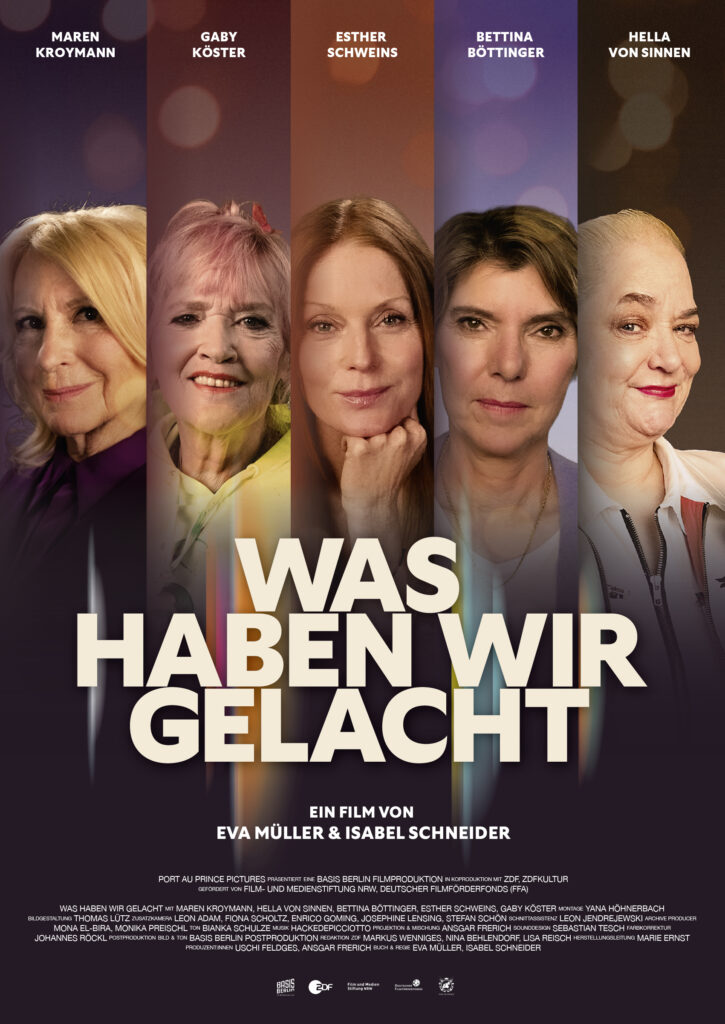
The cinema documentary “Was haben wir gelacht” traces the history of German entertainment television – and takes a peek into some of its darker corners. Whilst an entire generation grew up watching Thomas Gottschalk’s “Wetten, dass…?” and the “Harald Schmidt Show”, Maren Kroymann, Hella von Sinnen, Esther Schweins, Bettina Böttinger and Gaby Köster were among the few women who were visible, vocal and even controversial in these male-dominated TV programmes.
GRAP members Mona El-Bira and Monika Preischl took on the archive production for ‘Was haben wir gelacht’. We speak to them about the challenges and surprises they encountered whilst researching the archives and sorting out the rights for the film.
The film walks a fine line between laughing at television clips that now seem absurd and feeling a sense of horror. How did you experience this during your research?
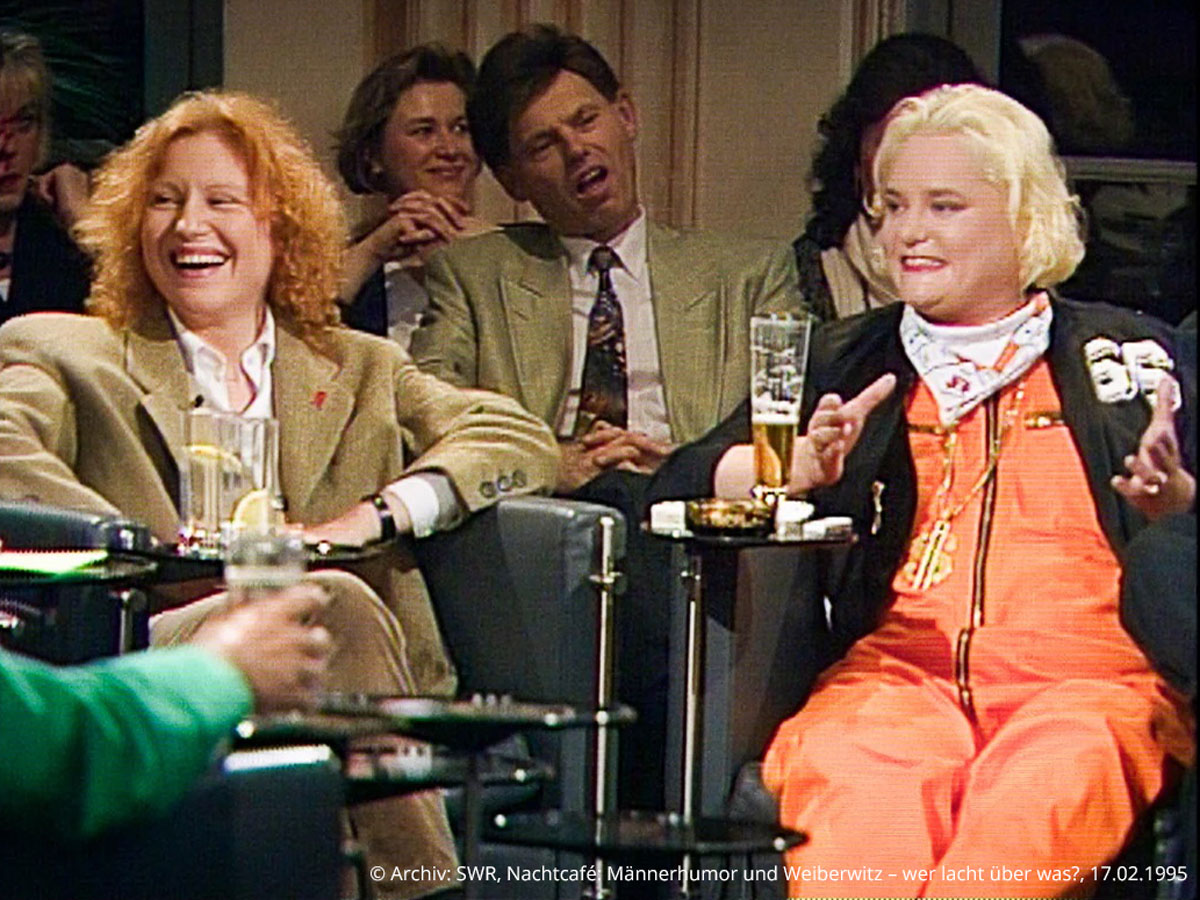
Mona and Monika: We were already somewhat prepared for the pervasiveness of misogyny on television. Partly from other projects, and partly because, between us, we’ve been watching TV for decades. We were already familiar with many of the programmes, but of course there were still jokes and moments that really took the biscuit. ‘TV Total’, for example, was already uncomfortable back then and, from today’s perspective, is simply unacceptable. The same applies to many of Harald Schmidt’s jokes. At the same time, however, we were also delighted to rediscover very progressive programmes by and featuring women that we perhaps hadn’t really kept track of, such as ‘Nachtcafé’ with Maren Kroymann or ‘Weiber von Sinnen’ with Hella von Sinnen.
It is particularly unsettling to see the collection of examples showing just how often women were touched without consent by presenters on television programmes back then, and how often their appearance was commented on. Which moments did you find most shocking during your research?
Particularly the moments when you notice that the facial expressions of the women involved freeze. Or when they try, as best they can, to smile the incident away and remain ‘professional’ – we can certainly identify with the feeling that goes with that. Probably every one of us has experienced a moment like that at some point, but seeing it happen right there in front of the camera is even more painful.
Can you give us a few figures? How long did you work on this film, and how many hours of archive footage did you sift through?
We began our preliminary research in 2024 – at that stage, the range of topics was still relatively broad. Apart from the backgrounds and appearances of the protagonists, we were also looking more generally at the presence of women on television, particularly in the 1990s and 2000s. But we also looked through the high-profile entertainment programmes of the 1960s to the 1980s. Initially, this wasn’t just about entertainment. For example, we watched all-male panels on ‘Anne Will’ to see how she handled them. We watched a great many episodes of ‘B. trifft’ and so on. This always involved finding out who the over-represented men were and how they treated their female guests and female colleagues. So, in fact, quite a few hours of archive material. On ‘Wetten, dass…?’ alone, we started in 1992 and finished in 2002… always keeping an eye out for when a female guest or a female contestant appeared.
Had you been in contact with the protagonists beforehand and exchanged views with them? Did they, for example, mention any programmes that had particularly stuck in their minds?
Contact with the protagonists was channelled through the directors Eva and Isabel, who also conducted the interviews. Whenever programmes were mentioned, these details were passed on to us. Often these were just descriptions, so it still took a great deal of research to find out exactly which programmes or episodes were being referred to.
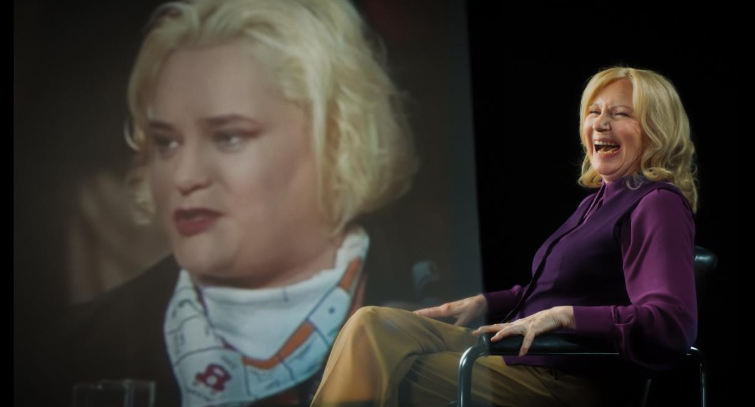
During filming, archive clips are shown to the protagonists via video projection and they react to them. This is currently a popular interview strategy. What did that mean for your research and rights clearance?
This strategy always comes with a bit of a queasy feeling. Because the team relies on being able to use a particular scene – an interview is structured around it – even though you can never be 100 per cent certain that you’ll be able to obtain a licence for that scene later on. The team was, however, aware of this risk. Once we’d narrowed down the selection, we tried to get an initial overview of the problematic areas and make preliminary enquiries with the potential rights holders. But there’s always a residual risk…
Is there a scene from the archive that means a great deal to you? Or a particular reaction from one of the women interviewed?
Probably the live moment when Hella von Sinnen is directly attacked by a man in the audience on a talk show – it’s simply a very stark example of just how casually women were defamed in public. But Hella von Sinnen handles it with such self-assurance and strength that it also shows you, at the same time, how to stand up for yourself.
You’ve already worked as a team on the 2024 cinema documentary ‘Riefenstahl’. What advantages does that bring for you and for the production?
We’ve actually been working together regularly on projects for almost 10 years now, and we usually split the assigned days between us. It’s certainly an advantage for the production that we cover each other’s holiday periods. But ultimately, the best thing about it is the exchange we have: it’s just incredibly fun to tackle the many challenges of this profession together with plenty of humour.
You sometimes hear that it’s complicated to secure the rights to certain shows, such as ‘Wetten, dass…?’, because the ‘Wetten, dass…?’ editorial team has the final say. What was your experience?
The film is a co-production with ZDF, so the way was already paved in that respect, as the producer Uschi Feldges and the directors had held lengthy preparatory discussions with ZDF about the film’s subject matter. The editors were really very open and helpful. The performances by singers on the programme are the tricky part. Fortunately, they weren’t particularly relevant to us; the focus was mainly on the moments before or after the performances. Milena Fessmann sorted out the necessary music rights. The project was also supported by a team of solicitors, who ensured that the right to quote was properly safeguarded where necessary.
The RTL programme “Tutti Frutti” is mentioned, but no video footage is shown – only photographs. What was the reason for this?
As far as we are aware, the rights to “Tutti Frutti” are held by the Mediaset Group in Italy, who have rejected all licensing requests in the past. For our purposes, photographs were sufficient.
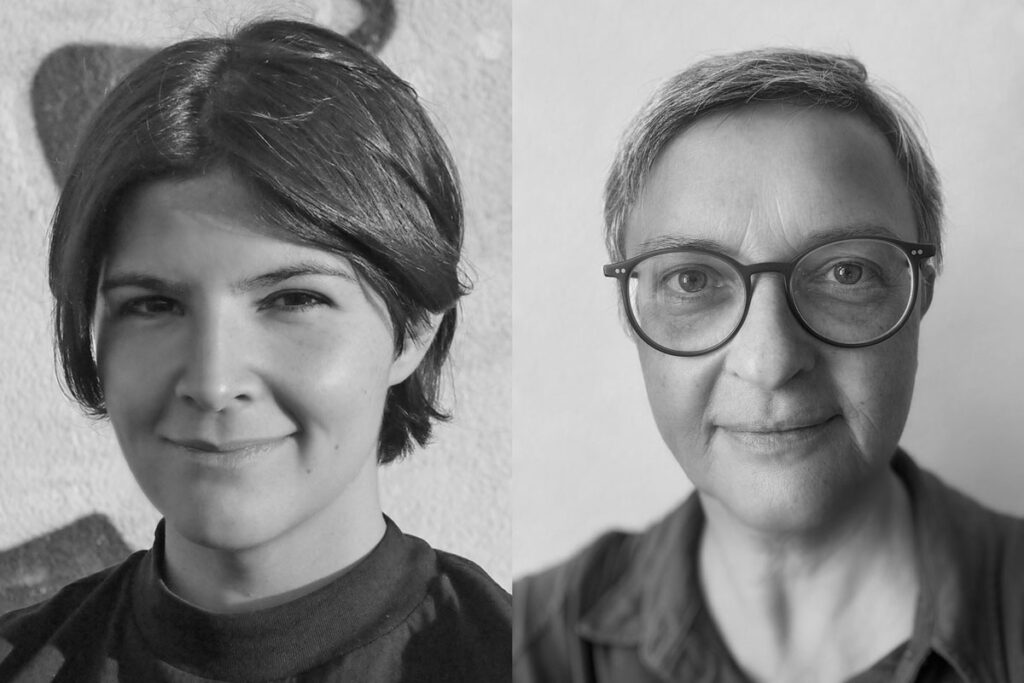
Eva Müller and Isabel Schneider wrote and directed the film. How did the collaboration go? Did they already have specific ideas for the archive, or did you have a lot of freedom in your research?
Eva and Isabel did a lot of the research themselves, and that worked very well. The discussions were incredibly interesting in terms of content – we talked a lot about our viewing experiences and our own personal experiences. At the same time, both were understanding of the many legal issues involved in the project and were always open to alternative solutions when problems arose.
What kind of reactions have you had from audiences to the film?
There were actually many moments when young women in particular recognised themselves in the protagonists. The fact that several generations of the women’s movement – with their different perspectives and ideas – come together here is a particularly lovely aspect of the film.
‘Was haben wir gelacht’ was released in German cinemas on 16 July 2026.